Well now that Yahoo and Adcenter are joining up, a new battle for the PPC budget might be on the way. Companies want to get the best for their money, of course, but sometimes cutting edges will backfire on the whole strategy behind PPC (Pay Per Click).

We had a client telling us once that we should not bid for the top organic searches they were targeting.

Now here is a trick question:

What would you prefer, to have one organic link on the first page or a paid link and an organic link on the same first page?

Think on it for a while.

If you do not know the answer, we can help. At Honeypot Marketing, we strive to provide our clients not only with the results they want but also with the knowledge they require to understand what is better. Sounds different? We are.

SEO same as old fashion marketing is applicable to all areas, industries, business types, so no matter what your company does, we can help.

So getting back to the PPC campaigns, setting an additional budget, or splitting the current budget to target into the Yahoo/Adcenter venture can provide additional revenue satisfaction.

Why? Yahoo’s experience on highly targeted paid search added to the Microsoft platform can only produce positive results for advertisers.

We are not undermining Google’s Adwords power it’s just that there is a new kid in town, re-vamped, and they are a good alternative.

Bidding with the Yahoo/Adcenter platform from the beginning is going to be less expensive since less people will be trying to outbid your keywords.

We can help implementing multiple PPC campaigns at a time.

Think about it, it’s like grabbing the .com revolution at the start, a one-time shot. Contact Honeypot Marketing, we can help.

Posted in PPC.

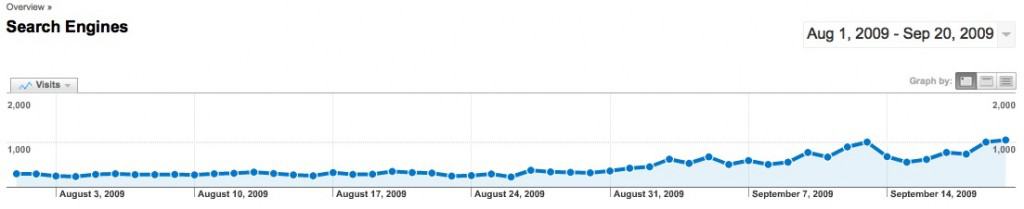
It’s not often we plug search traffic increases but every so often when we see resounding results we like to toot our own horns a bit. In particular when the search results are highly converting and giving our client fantastic returns.

This is one of those cases. We’ve been working on the technical SEO for the client site, we corrected a number of errors in their Google Site Map and in their overall site structure. As this site is an  incredibly dynamic piece of web software it was not a trivial process, however after a number of months we have seen fantastic results. We are now working closely with the design team and software team to redesign the entire site which should be lanuched in the next 90 days.

It’s an exciting project in a fantastic space. We love our clients over here at Honeypot and we also love seeing them happy about their Search Engine Results and their bank accounts growing due to our efforts with them.

500% Search Engine Increase
Reblog this post [with Zemanta]

Over the past couple of days there has been alot of chatter about the changes to the Google Home Page. These include:

  1. Enlarged Font in the search box.
  2. CSS Search Buttons (fancy).
  3. An enlarged text field for searching.

Now those are nice enough updates -  I wouldn’t call them earth shattering as they are not likely to change the way a searcher interacts with Google.com. If a change in the Google UI changes how a web searcher (read: potential customer) finds sites then it can significantly affect the traffic generated to your website.

The newest change that we have seen over here at Honeypot Marketing is the addition of URL‘s into the Google Suggest Drop Down while you type in a search. Check out these screen shots:

Direct Links in Google Suggest
http://news.google.com/news?q=gordon+nelson+investments&output=rss
More Direct Links in Google Suggest
"Amaz" triggers Amazon.com - slightly presumptive.

We have not seen this until literally about 10 minutes ago and we are constantly checking the Google UI and SERPs as part of our day to day work.

This is a significant update as it can lead to your web visitors bypassing a Search Engine Result Page all together.

This makes a #1 ranking even more significantly important for your business (depending on your point of view). Please post your comments and/or screenshots if you have them!

Additional Observation: This seems to be triggered inconsistently and is triggering domain name matches rather than any kind of semantic or meaningful match. We could be wrong but that seems to be the case at this moment.

Reblog this post [with Zemanta]
Posted in SEO.
Image representing Microsoft as depicted in Cr...

Sometime next year, Microsoft will fulfill a planned integration to power Yahoo‘s search results with Microsoft’s Bing Engine. The move will effectively consolidate 28% of the US search market, giving both companies a platform upon which to seriously battle Google.

As we get closer to this integration we’re all faced with a new challenge:

How do you bring your sites and brands to the top five organic search results on both Bing and Google.

And according to Advertising Age, “figuring that out is going to amount to a mini stimulus package for digital agencies and search-engine-optimization consultants in the first half of 2010.”

Bing is a wholly different animal from Google and ex-rival Yahoo. Bing’s algorithm, both ranks pages and presents results in its own unique way. For example, it often shows just five organic results on its first page — after which other results are categorized.

Its potential to split the market in two reminds me of the early days of search, when separate optimized pages were created for Google, Yahoo, Lycos and AltaVista. This pretty much leaves us with creating pages and site structures optimized for two different search engines.

This is not an impossible task but it certainly splits resources, makes your SEO and Internet Marketing Strategy more complex and given the age of Bing could shift wildly as they refine/update/change their algorithm.

Bing also offers separate placement for photos and video, meaning we can take advantage of these forms of rich media and saturate the user experience even further with our chosen brands.

As it stands, however, Bing is still working on improving its algorithm, and any strategies that seem solid today may be less effective following the Yahoo integration. You might want to consider phasing in a content strategy around Bing so that adaptations and changes can be made in response to Algorithmic updates to that search engine.

One thing is (nearly) for certain: PageRank lends more leverage to inbound links, while Bing hones in on content or keywords in the pages.

Also consider the potential that both sites will eventually incorporate real-time search, such as relevant Twitter or Facebook updates. This would be the next step in Google’s “Universal Search” philosophy of integrating their niche engines into the global search results (showing Images, Video, News and Blog Updates in the main Google Search Results).

One possible benefit of this change in the search engine landscape: with one major player out of the field there is the possiblity to capture (nearly) 100% of search traffic if you dominate both Bing and Google for your chosen Search Terms.

As always these are turbulent times in the world of Internet Marketing and Search Engine Optimization – the key to maintaining and leveraging search engines is constantly adapting your strategy to remain on the leading edge of Search Engine algorithms. But at the end of the day this simple fact makes sense since the search engines are adapting to what people are looking for, those people are your potential customers.

Interested in leveraging the power of Search Engines and Internet Marketing for your Business? Contact Us Today!

Drop Us a Note
  1. (required)
  2. (valid email required)
 

cforms contact form by delicious:days

Reblog this post [with Zemanta]
Posted in SEO.
Image representing Google as depicted in Crunc...
Conversion Optimization Reigns Supreme

Hal Varian [Google's Chief Economist] believes that a new era is dawning for what you might call the datarati—and it’s all about harnessing supply and demand. “What’s ubiquitous and cheap?” Varian asks. “Data.” And what is scarce? The analytic ability to utilize that data. As a result, he believes that the kind of technical person who once would have wound up working for a hedge fund on Wall Street will now work at a firm whose business hinges on making smart, daring choices—decisions based on surprising results gleaned from algorithmic spelunking and executed with the confidence that comes from really doing the math.”

The question is frequently asked: What is conversion optimization?

Well, looking up at Hal Varian’s quote (he is helping run arguably the world’s most innovative company, so we’ll listen to him), it is the analytic ability to use your data and benefit from a structured website optimization and formal testing program. Here are a few tips and tools to get your optimization programs off the ground:

  1. Start making decisions based on data, not on opinion.
  2. Get analytics set up well, so you really know which pages, products, acquisition sources, etc, your money is coming from. Knowledge is power (and profit).
  3. Start carrying out split tests (A/B tests or multivariate tests) on different aspects of your website.
  4. Use advanced heat maps and user videos to see what your users are really doing. Use ClickTale or CrazyEgg.
  5. View the data and the interpretation of that data from a neutral position. Far too often employees are fearful of poor results, when in fact poor results were likely always occurring.
  6. Remember a Click to Conversion increase from 1.5% to 2.0% for a company doing $1 million a year sales translates to a sales lift of 25%. That’s fantastic business growth based on testing and acting on those tests.

Lastly and most importantly:

Create a culture in which people are rewarded for carrying out tests, and not punished for making mistakes.

Want to get your Conversion Optimization program off the ground and start increasing sales? Contact Us Now!

Drop Us a Note
  1. (required)
  2. (valid email required)
 

cforms contact form by delicious:days

Reblog this post [with Zemanta]
MOUNTAIN VIEW, CA - JANUARY 31:  (FILE PHOTO) ...
Image by Getty Images via Daylife

Link Building is a very large subject and there are literally hundreds of ways to build links which are authoritative. We’ve compiled a list of some of the most useful tactics and strategies which you can integrate into your link building strategy and into your day to day routine.

What are the Link Properties We Want?

  • Vary the anchor text of links frequently (every 3 days) we need to make the process organic. Building the same link over and over will cause the placed links to be ignored by the search engines.
  • Vary the target URLs we want a good blend of links pointing into the site. Do not set every link to the homepage. This will appear unnatural.
  • Find authority sites. What are algorithmic authority sites?
    - Are content heavy
    - Have been online 3+ years
    - Influential / high profile industry sites
    - Have numerous quality inbound links
    - Rank well!
  • Follow these general rules:
  • Look at partner sites carefully, avoid those with excessive reciprocals and sponsored (site-wide) links.
    • Link slowly, add content at the same time.
    • Use several different linking tactics.
    • Spend resource on obtaining authority links
    • Focus on traditional content generation tactics
    • Notify the media when you’ve added sizable content
    • Find an alert service you like and use it
    • Use the social media sites to spread emotional content
    • Find your niche community and use it
  • Search engines frown on things that look too manipulated. Don’t do all links with super-optimized anchor texts, doesn’t look natural.
  • How fast is too fast for building links? Depends. It can be OK to have a large jump, IF things are in balance, like increased searches, media mentions, they understand things are cyclical, etc.

Now onto the good stuff, the Linking Tactics…

  • Reciprocal Linking. We only use reciprocal linking for new site which do not have a long history. The reciprocal links must be hand submitted and come from quality sites.
  • Avoid throwing up red flags. Don’t acquire too fast. Don’t use all the same anchor text. Don’t use same tactic over and over.
  • Make links consistent (www vs non www). Use a library of links which are prewritten, rotate them and continually add to the library to ensure freshness.
  • Get involved in forums. Use a footer which links to a number of sites not specifically the casino. Forum topics can include Internet Marketing, Gaming (Video Gaming) etc. Get involved in the discussion thread rather than spam the forum with irrelevant content. Many casino forums will not allow providers to post so avoid gambling forums.
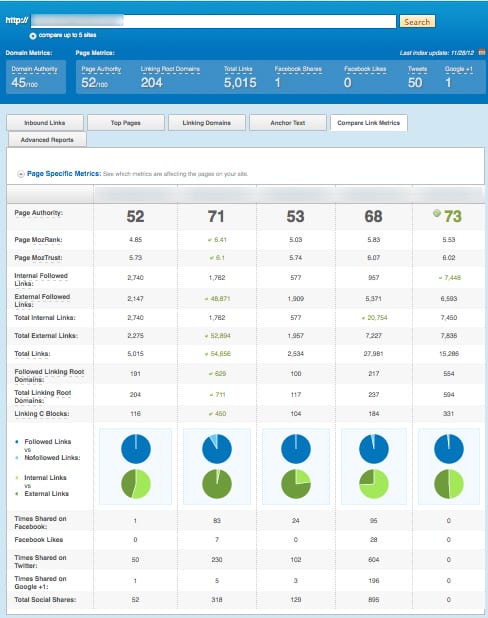
  • Use Hubfinder, Majestic SEO, SEOMoz.org to find new links and research link terms.
  • Install the SEOMoz toolbar for firefox for domain information access and Nofollow hihglighting.
  • Link building strategies using content generation tactics work best long term.
  • Use the SoloSEO link search tool http://www.soloseo.com/tools/linkSearch.html
  • Passive linking. Ask people to link to you! Give them a t-shirt, swag or free SEO advice (eBook).
  • Find industry experts for product reviews, board seats, testimonials, article writing, spokesman. Associate your products with respected community figures. Key search term is expert witness directories.
  • Regular directory submissions. dmoz, yahoo, business.com, aviva, best of the web. These directories let you submit one website one time. These directories are editorially run, all are reviewed by a real human. Do not focus too much time on regular directory submissions. Submit and move on.
  • People don’t think about all of the different elements on their sites, like video, photos, downloads, coupons. Find niche directories that let you link to that type of content. Also consider new ways to add multimedia content to the sites, this is important for Google Universal Search.
  • Traditional and link bait:
    1 Create an article resource center on your site.
    2. Pull topics from customer service / your stats
    3. Keywords in title, 2x in body
    4. Include a bio with each article, even those on your site.
    5. Write long version for your website, send out shorter versions.
    6. Issue press release announcing new content added.
  • Sharing our content by adding a creative commons license to our sites.
  • Article Dropping.
    1. Drop an article.
    2. Swap content.
    3. Drop a link.
  • Submit to general “How To” sites (eHow, WikiHow, Instructables, etc.), Specialty tutorial sites (NewBaby, AmateurGourmet), Video (Expert Village, Teacher Tube)
  • Guest blogging / E-zines. To find guest blogs, look for terms like “looking for writers” “submit an article” “contribute content” in addition to your keyword.
  • Media Links. Three basic ways to attract media links:
    1. Target key journalists
    2. Issue press releases
    3. Develop and promote your onsite media and information (article) resource.

You get a lot of feedback from the media people. They’re competitive, if one person writes about something, it interests other people.

If you issue a press release, make sure you actually have news!

  • How to find media contacts: Back link competitors, develop your own media database. Mine social news and bookmarking sites like delicious, topix. Set Google Alerts for “news” and add keywords (editor, journalist, reporter, blogger, etc.). Look on Twitter. http://mediaontwitter.pbwiki.com
  • More Media Links: Cyberjournalist.net, blogcatalog, yahoo news, Bacon’s media directories good places to look.
  • In addition to Digg, Reddit, Mixx, StumbleUpon, try niche sites like Fetch (small biz), Pick Station (music), and more. Continually find more niche sites, there are thousands online.
  • Build credibility and links. Join industry-related groups like the BBB, chamber of commerce, industry associations.
  • People link to what they like and trust. Who trusts you? Customers, Vendors, Association Members
  • Find coupon and deal sites like http://retailmenot.com . Submit coupons, encouraging viral action, email-only contests.
  • Create case study of a contest that we ran to build links. Join an industry association. Sent intro email. Month later, discount coupon, another month later offered bigger discount and contest, suggested links.
  • Find .edu sites: job opportunity boards, forums, etc.

We’ll be adding to this list over time so we suggest you bookmark this and subscribe to our RSS feed!

Reblog this post [with Zemanta]
Posted in SEO.
Image representing Google as depicted in Crunc...
Image via CrunchBase

Well interesting story that :)

We recently moved our entire site over to a new CMS, moved IP addresses and update quite a bit of the site content. Our toolbar PR has slipped off but we fully expect it to rebound fairly quickly as we are adding the following:

  1. New Site Services Pages.
  2. Interactive Content and Screencasts.
  3. Regular Blog Post Columns and Updates.
  4. Updated PDF versions of case studies, services and client tools.
  5. A new and improved client backend for reporting and other fantastic features.
  6. Guest blogging and guest posting columns.

Although it might appear to be a bad thing that our site has slipped it’s in fact a good thing: Google, Bing and Yahoo have been spidering the site aggressively and we’ve been making tweaks to all of our XML sitemaps and the enclosed content.

Also as a note for anyone redirecting inbound links. When you 301 you index pages and page that had previously has inbound links it will take sometime for the engines to learn that the moves are permenant. This normal and should cause you no reason to panic. Search Engine Optimization is a marathon, not a sprint.

We fully expect a nice little rebound in the near future!

Reblog this post [with Zemanta]